


Managed IT for private clubs requires a scope-based quote: the total depends on the people, systems, locations, and support responsibilities covered by the agreement. Compare the recurring service commitment with separately scoped onboarding, equipment, software, and project work before approving a 2026 budget.
TL;DR
- Managed IT for private clubs needs a written scope covering help desk, cybersecurity, infrastructure, and vendor responsibilities.
- Compare support hours and exclusions before comparing proposals; response time is not the same as resolution time.
- DivergeIT fits growing organizations seeking managed IT, cybersecurity, and compliance services together.
- Separate recurring support from onboarding, equipment replacement, software subscriptions, and project work.
Why this matters
Your club needs an agreement that reflects when members use its services, not just when the administrative office opens. A proposal covering office computers alone does not establish who handles a booking interruption, a disconnected payment terminal, or a network problem during an event.
Start with the operating scope in the managed IT services for private clubs guide. Then ask each prospective provider to quote the same responsibilities. A proposal is comparable only when the coverage, exclusions, and accountability match.
How much does managed IT cost for a private club?
The budget depends on what the provider agrees to operate, support, secure, and restore. For your 2026 proposal review, require a breakdown that separates ongoing service from implementation work and purchases. Do not treat a recurring service line as the club's entire technology budget.
Use this structure to identify what each proposal includes without assuming every provider packages services the same way:
Recurring support
- What the proposal should identify: Covered users, devices, locations, and service hours
- What to clarify: Whether shared terminals and seasonal staff are included
Cybersecurity
- What the proposal should identify: Named controls and monitoring responsibilities
- What to clarify: Who investigates alerts and handles containment
Backup and recovery
- What the proposal should identify: Protected systems and restoration responsibilities
- What to clarify: Whether recovery testing and incident recovery are included
Onboarding
- What the proposal should identify: Discovery, documentation, access transfer, and initial setup
- What to clarify: Whether existing problems require separate remediation
Software subscriptions
- What the proposal should identify: Included licenses and account ownership
- What to clarify: What remains payable directly to software vendors
Equipment and projects
- What the proposal should identify: Replacement equipment, installations, and major changes
- What to clarify: Which changes fall outside routine support
Ask for an explicit exclusion list alongside this breakdown. If network administration appears in the proposal, for example, confirm whether it covers configuration changes, monitoring, equipment replacement labor, or only troubleshooting.
Keep those distinctions in the approval document. Otherwise, the board approves a service label rather than a defined operating responsibility.
What belongs in the recurring agreement?
The recurring agreement should identify the work your club expects without a separate project authorization. That includes the handling of support requests, account changes, routine maintenance, and security responsibilities where those services are contracted.
Ask the provider to distinguish maintaining an existing environment from changing it. Supporting a working wireless network and redesigning coverage across a property are different assignments; the agreement should say where that boundary sits.
What belongs outside routine support?
Require separate treatment for purchases and work that changes the environment, unless the agreement expressly includes them. Examples to resolve in writing include replacing network equipment, migrating applications, opening another facility, and repairing inherited configuration problems.
The distinction is not an argument against project work. It gives your club a clear authorization process and prevents a routine support request from becoming an unapproved project.
Which support model should your club compare?
Compare the staffing model before comparing service packages. The right arrangement depends on whether your club already has someone accountable for technology and which responsibilities that person can retain.
Fully managed IT
- Best for: Clubs assigning day-to-day IT operations to an outside provider
- Main advantage: Establishes an external owner for contracted responsibilities
- Main limitation: Requires careful documentation of exclusions and vendor boundaries
Co-managed IT
- Best for: Clubs with an internal IT owner who needs defined outside support
- Main advantage: Divides work between internal staff and contracted specialists
- Main limitation: Overlapping responsibilities need a written handoff process
Break-fix support
- Best for: Clubs seeking help for discrete technical problems
- Main advantage: Keeps the engagement focused on a specific repair
- Main limitation: Does not establish ongoing monitoring or maintenance unless separately contracted
Choose the model that closes an ownership gap, not the one with the longest feature list. If your internal employee handles applications but cannot cover absences, define the missing coverage rather than buying an unclear duplicate service.
For that arrangement, the co-managed IT services guide addresses the division between internal and outside responsibilities. Your proposal should identify who receives requests, who approves changes, and who owns an unresolved incident.
Why managed IT scope varies between private clubs
These factors belong in the discovery conversation because each changes the work the provider is being asked to perform:
- Supported people and devices. Identify employees, shared workstations, administrative laptops, and other equipment requiring support. Define how seasonal staffing changes affect coverage.
- Property and network layout. List the facilities and network areas included in the agreement. Specify responsibility for member wireless access separately from administrative systems.
- Operating hours. State when the club needs live assistance, including relevant event periods. Identify which incidents qualify for escalation outside normal coverage.
- Application dependencies. Document membership, reservations, payments, and other business applications your club actually uses. Assign responsibility for working with each application vendor.
- Security and recovery responsibilities. Name the systems to protect, the controls to administer, and the recovery tasks to perform. Avoid treating a general security label as a complete incident-response agreement.
- Existing condition and planned changes. Separate maintaining the current environment from correcting documented problems or delivering planned upgrades. Ask for approval gates before additional work starts.
Do not accept member count as a substitute for this inventory. Members, employees, supported accounts, and managed devices describe different parts of the environment.
How do you get a comparable managed IT proposal?
Use the same sequence with every provider. A consistent brief gives your club a defensible basis for a 2026 decision and makes omissions easier to identify.
- Inventory systems. List the people, equipment, applications, facilities, and outside vendors within scope. Mark anything whose ownership is unclear.
- Set coverage. Document required support hours, reporting channels, incident priorities, and escalation contacts. Distinguish an acknowledgment from an engineer beginning work.
- Assign ownership. Identify who handles accounts, network faults, application-vendor coordination, security alerts, and recovery decisions. Give each responsibility an accountable owner.
- Separate projects. Ask the provider to distinguish onboarding and remediation from ongoing operations. Require authorization before work moves outside the recurring agreement.
- Review exclusions. Read the exclusion list against realistic club incidents. Resolve gaps before signing rather than during an interruption.
Keep the resulting scope with the agreement, not in a salesperson's email. Club leadership and the support team need the same reference when an issue crosses between network infrastructure, an application, and an outside vendor.
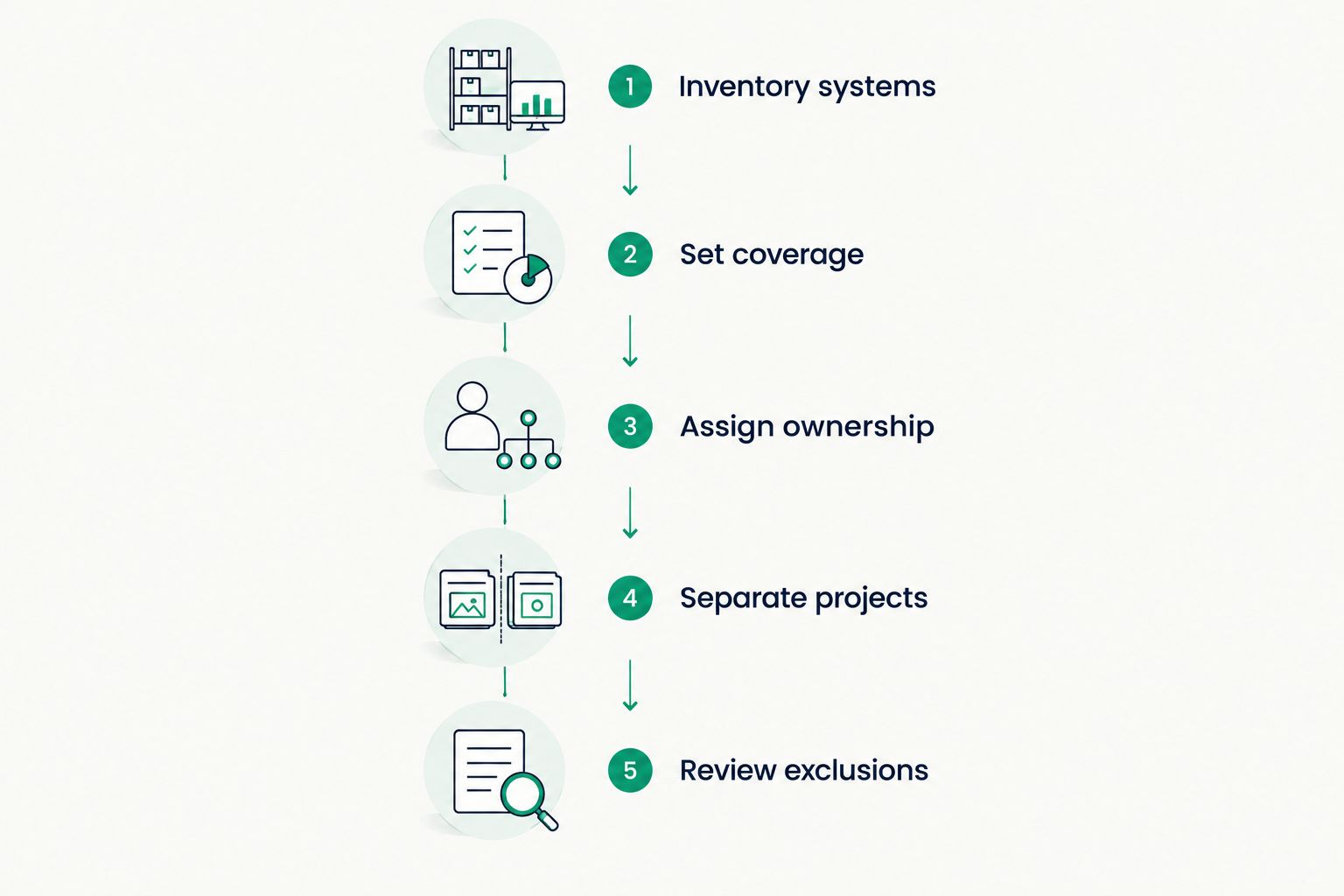
Define responsibilities before comparing proposals.
What does a response commitment actually cover?
A response commitment defines an initial service action; it does not automatically establish when the business problem will be resolved. Your agreement needs to explain what starts the clock, what counts as a response, and which support hours apply.
For a 2026 agreement, test the wording against a club-specific scenario: staff cannot access the membership application during an event. Does the provider begin troubleshooting, contact the application vendor, communicate with club leadership, and remain responsible for coordination? Ask for the answer in writing.
The decision about whether managed IT is worthwhile rests on that transfer of responsibility, not merely access to a help desk. If your staff still have to identify every fault and coordinate every vendor, the scope leaves that work with the club.
Ask who can authorize emergency changes and who updates staff when service remains interrupted. A technically detailed agreement still needs a practical communication process.
How should your club evaluate security and recovery?
Treat prevention, incident handling, and restoration as separate responsibilities. A proposal that includes security monitoring does not, by that description alone, establish responsibility for restoring an affected application or rebuilding a device.
Ask the provider to name the controls included and the accounts or systems they cover. For recovery, identify what is backed up, who checks failures, who authorizes restoration, and how restoration is tested. Record dependencies on application vendors and external hosting services.
If your club accepts payment cards, ask the payment provider and IT provider to document their respective responsibilities. Do not assume a managed IT agreement transfers every obligation connected to payment processing.
Require evidence of completed work, not just a list of installed tools. Useful deliverables include an asset inventory, a record of support activity, documented access changes, and recovery-test records where those activities are contracted.
When is DivergeIT relevant to this decision?
DivergeIT is best suited to growing small and mid-sized organizations seeking managed IT, cybersecurity, and compliance services together. Its stated service scope makes it relevant when your club wants those responsibilities considered in the same discussion.
Ask DivergeIT to map its managed IT services to your club's inventory, operating hours, application vendors, and escalation requirements. Confirm the club-specific responsibilities in the proposal rather than assuming a general service offering covers every system.
The benefit of considering these services together is a single discussion about support and security boundaries. The limitation remains contractual: the service descriptions alone do not establish coverage for a particular club application, event schedule, or recovery requirement.
Define your club's IT scope
Discuss supported systems, service hours, security responsibilities, and exclusions before requesting a proposal.
Should your club choose fully managed or co-managed IT?
Fully managed IT fits a club assigning contracted operational responsibilities to an outside provider; co-managed IT fits a club retaining an internal IT owner. Choose based on the responsibilities you need covered, not the package name.
For either model, document who handles an unresolved ticket that involves an application vendor. Shared involvement works only when accountability remains clear.
Does managed IT include membership and payment software?
Managed IT includes membership and payment software support only to the extent stated in the agreement. Separate application administration, vendor coordination, network troubleshooting, and software licensing when reviewing the scope.
Ask for a written example of how the provider handles a failed transaction or unavailable reservation system. That example exposes gaps a broad application-support label leaves unresolved.
Can your club keep its existing IT employee?
Co-managed IT lets your club retain an internal IT employee while assigning selected responsibilities to an outside provider. Define the retained duties, escalation process, and coverage during absences before selecting the arrangement.
Keep approval authority explicit. The internal employee and provider need to know who can change access, schedule maintenance, and authorize recovery actions.
FAQ
How do I budget for managed IT for a private club in 2026?
Budget for managed IT for a private club by separating recurring support, onboarding, software, equipment, and project work. Require each proposal to identify included responsibilities and exclusions against the same club inventory.
Does a private club need support outside office hours?
A private club needs support hours aligned with the operations it wants covered. Specify relevant event periods and define which incidents trigger assistance outside the standard service window.
Is fully managed IT better than co-managed IT for a club?
Fully managed IT fits outsourced operational ownership, while co-managed IT fits a club retaining an internal IT owner. Compare the responsibility split and escalation process rather than assuming either model is universally better.
Are new computers included in managed IT?
New computers are included only when the agreement explicitly includes them. Ask the provider to separate equipment purchases, installation work, and ongoing device support.
Does a fast response guarantee that our systems will be fixed quickly?
A fast response commitment does not establish a resolution deadline. The agreement must distinguish acknowledgment, active troubleshooting, escalation, and restoration responsibilities.
What should our club ask before signing an IT agreement?
Ask who owns each supported system, when assistance is available, what work is excluded, and who coordinates outside vendors. Confirm account ownership, documentation access, and the handover process if the agreement ends.
One last thing
Before approving your 2026 agreement, ask the provider to walk through a club-wide internet outage during an event. Who receives the call, checks the network, contacts the connection provider, and updates club leadership?
Then check whether those actions appear in the scope. The most useful proposal is the one that assigns responsibility when systems fail, not the one that lists the most services.